Rudzinsky Associates Reflects on Five Decades of Laser Breakthroughs

Understanding the Global Laser Revolution: Five Decades of Rapid Photonics Advancement
Over the last 50 years, lasers have evolved from niche scientific curiosities to indispensable pillars of modern innovation. Whether driving the latest breakthroughs in microelectronics, biomedical imaging, telecommunications, or space exploration, laser-based solutions have redefined what is possible. This broad transformation reflects decades of collaborative engineering progress, from reducing bulky research equipment to commercializing compact, high-efficiency platforms that integrate seamlessly into countless industrial workflows.
Alongside these technical gains, the business landscape around lasers, optics, and photonics has expanded at a remarkable pace. Global demand for precise, high-speed processing has fueled growth in start-ups, strategic mergers, and robust partnerships among established companies. Today, organizations face an increasingly competitive market for professionals skilled in laser physics, optical engineering, and photonics product development. Recruiting the right talent is often the critical lever that determines whether emerging laser technologies effectively move from concept to commercially viable applications.
The following sections trace key milestones in laser evolution, highlight the latest industrial breakthroughs, and explore the roles of specialists who make these advancements possible. With an eye to current trends in integrated photonics and ultrafast pulse generation, this article sheds light on how ongoing innovation is reshaping fields as diverse as manufacturing, quantum computing, and healthcare.
From Gas Tubes to Fiber Arrays: The Evolution of Light-Based Systems
Gas Laser Foundations: Laying the Groundwork for Modern Applications
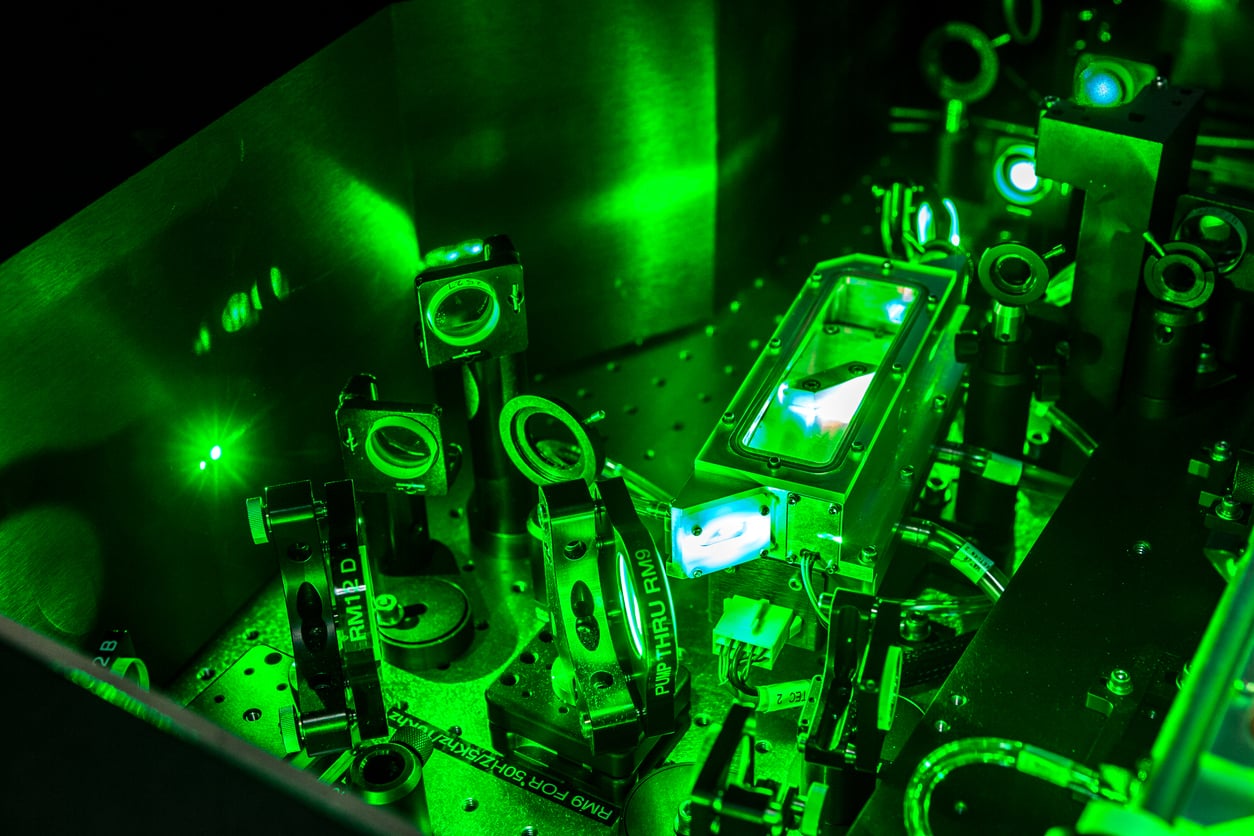
In the early decades of laser research, gas lasers—particularly helium-neon (He-Ne) and carbon dioxide (CO2)—were the workhorses of labs and pilot industrial environments. Though large and power-intensive, these systems introduced unprecedented accuracy in spectroscopy, metrology, and basic cutting applications. Their beams offered stable output in defined wavelength ranges, enabling reliable experiments and paving the way for more specialized uses.
Transition to Solid-State Systems: Efficiency and Compact Footprints
As crystal growth and semiconductor fabrication techniques matured, solid-state and diode-pumped lasers began supplanting older gas-based models. These solid-state platforms delivered higher efficiency while occupying dramatically smaller footprints. Their enhanced reliability and faster repetition rates opened doors to high-speed engraving, fine-scale drilling, and precision cutting across numerous industries.
Rapid improvements in diode technology also broadened wavelength accessibility, further diversifying use cases. Solid-state lasers quickly found homes in electronics manufacturing, where they solved emerging challenges in micro-patterning and circuit board design. Equally important were their reduced maintenance needs, which aligned with the increasing push for lean production and lower operational costs.
Fiber Laser Dominance: Cleaner Beams and Heightened Stability
Over time, fiber lasers became the pinnacle of laser performance. By leveraging rare-earth-doped optical fibers, these systems deliver cleaner beam profiles and more stable outputs, providing tight tolerances in applications such as semiconductor packaging and automotive component manufacturing. Fiber lasers also reduce risk of beam misalignment, helping to ensure consistent production quality even in complex automated environments.
Another significant advantage of fiber lasers is their modular design, which simplifies system integration. Many modern manufacturing lines integrate high-power fiber lasers for tasks ranging from welding and cutting metal sheets to engraving intricate patterns on polymer surfaces. As processing speeds continue to rise and costs fall, fiber lasers remain a prime example of how decades of engineering iteration can yield powerful, streamlined solutions.
Emerging Industrial Applications: Microelectronics, Manufacturing, and Medical Advances
Microelectronics: Driving Miniaturization and Connectivity
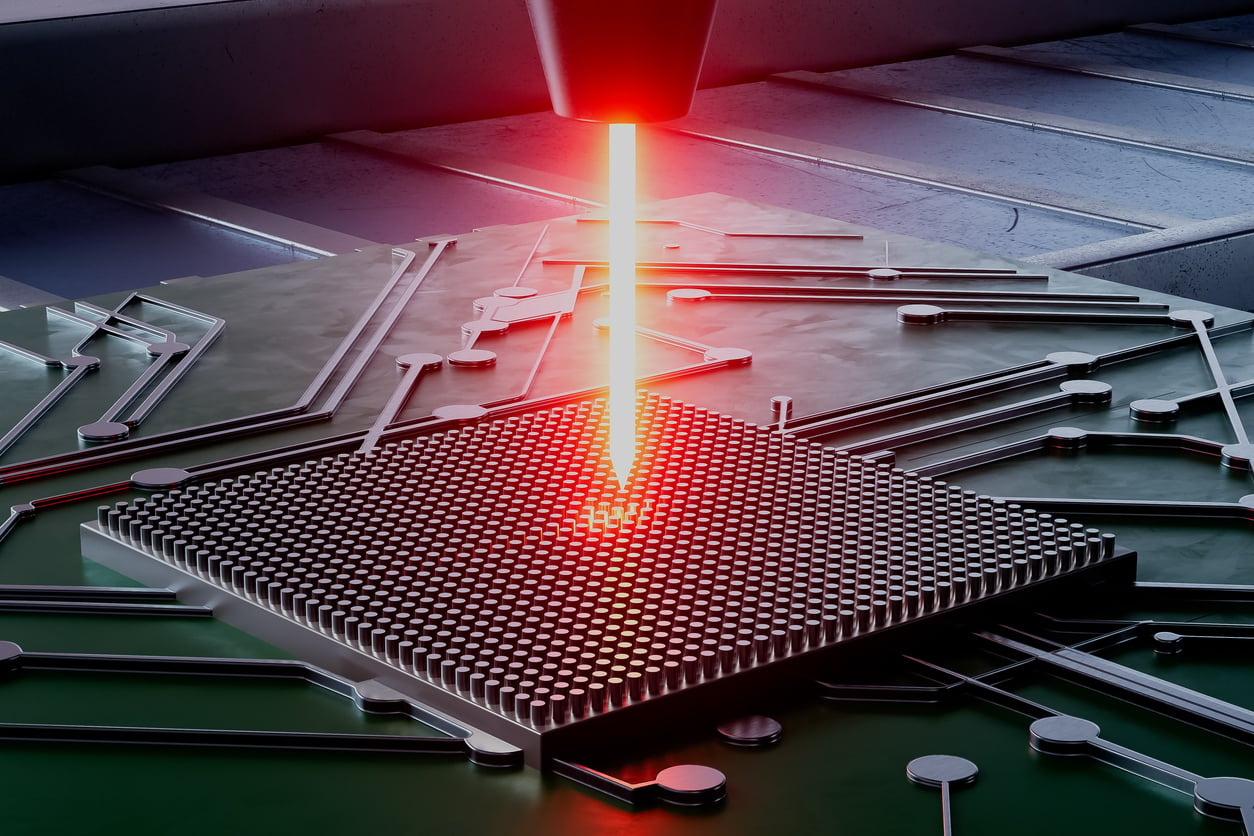
Few fields benefit more from laser precision than microelectronics. Laser-based processes such as wafer dicing, circuit trimming, and microvia drilling enable device manufacturers to pack more functionality into smaller form factors without compromising performance. High-precision ablation can remove micrometers of material at a time, a capability that proves indispensable in producing the miniature chips found in smartphones, wearables, and advanced computing systems.
Additionally, telecommunications providers heavily rely on laser diodes in fiber-optic networks. This technology allows vast volumes of data to traverse continents at high speed. As consumer expectations for seamless connectivity grow, so does the imperative for both research and production-scale laser technologies that can handle increasingly large data loads with minimal signal loss.
Laser Manufacturing: Ultrafast Pulsed Systems and Additive Techniques
Beyond microelectronics, lasers are revolutionizing general manufacturing workflows with ultrafast pulsed systems. Femtosecond and picosecond lasers facilitate “cold” processing, minimizing the thermal impact on surrounding materials. This advantage proves central for industries that work with thin metals, ceramics, and polymers, where any unintended heat transfer can compromise product integrity.
Laser-based additive manufacturing has also gained significant traction, especially for high-quality, lower-volume production. Processes such as selective laser melting (SLM) and laser sintering allow aerospace and automotive firms to rapidly prototype and produce complex metal components. By layering materials with precision, these techniques reduce waste, shorten lead times, and open possibilities for manufacturing custom parts that were previously impractical.
Healthcare and Biomedicine: Precision Therapies and Advanced Diagnostics
Laser capabilities in the medical and biomedical sectors range from noninvasive imaging to targeted treatments. LASIK eye surgery uses laser precision to reshape the cornea, delivering vision correction with minimal collateral damage. Photodynamic therapy leverages light-activated compounds to destroy cancer cells selectively, mitigating side effects common to more invasive treatments.
As lasers continue to miniaturize, new avenues for innovative procedures open up. Researchers are exploring targeted photothermal therapies that heat and eliminate diseased tissues without harming healthy cells. Concurrently, miniaturized laser devices are improving point-of-care diagnostics, where handheld systems can rapidly detect biomarkers in blood or tissue samples. This level of specificity is crucial for earlier interventions and personalized treatment plans.
Leading-Edge Innovations: Integrated Photonics, Ultrafast Pulses, and Quantum Frontiers
Integrated Photonics: Transforming Optical Circuits on a Chip
Traditional optical setups often involved racks of lenses, mirrors, and mechanical stages. Today, integrated photonics offers an efficient alternative by condensing essential components—waveguides, modulators, and detectors—onto a single chip. By reducing size and power consumption, this approach significantly lowers system costs and unlocks entirely new applications.
Data centers are prime beneficiaries of integrated photonics. As global data traffic soars, organizations need to move information faster and at lower energy budgets. Silicon photonics chips address this challenge by enabling high-speed, parallelized data transfer. In healthcare, on-chip spectra analysis enhances diagnostic capability, supporting rapid, precise detection of disease markers in compact point-of-care devices. The success of integrated photonics also resonates in environmental monitoring, where miniaturized spectrometers can be deployed in remote or confined spaces.
Ultrafast Pulses: Capturing Events at the Atomic Scale
Femtosecond and attosecond lasers are shaping new frontiers in fundamental science. These lasers emit pulses so brief that they capture electron movements and chemical reactions at their most granular levels. By effectively “freezing” processes that occur in trillionths or quadrillionths of a second, researchers gain insights that could reshape drug development, semiconductor design, and material engineering.
Ultrafast lasers also help refine precision manufacturing processes. Leveraging extremely short pulse durations prevents excessive heat build-up, thus preserving sensitive surfaces. This method proves particularly appealing for microlithography tasks in semiconductor fabrication, where even the smallest defects can undermine entire product lines.
Quantum Photonics: Secure Communications and Next-Generation Computing
One of the most groundbreaking areas in photonics is quantum technology, where single-photon emitters, photonic qubits, and quantum key distribution (QKD) systems promise unprecedented security and computational capabilities. Because quantum states can be altered by mere observation, quantum-based encryption stands to revolutionize cybersecurity.
The path to mainstream quantum computing hinges on precise laser control, from initializing and manipulating qubits to ensuring coherence over extended periods. Sophisticated optical components, including beam splitters and nonlinear crystals, must function seamlessly in carefully regulated conditions. As these technologies mature, professionals with knowledge of quantum mechanics, advanced optics, and system integration will form the backbone of this transformative new field.
Bridging the Talent Gap: Specialty Roles and Skill Sets Fueling Laser Advancements
Optical Engineers, Material Scientists, and Application Specialists
The rapid pace of photonics innovation calls for a diverse range of talents. Optical engineers often lead system design and beam alignment, which requires close collaboration with mechanical and electronics teams to ensure manufacturability at scale. They fine-tune beam quality, improve thermal stability, and tackle issues such as stray reflections or lens aberrations.
Material scientists and process engineers bring equally critical expertise. They study how different substrates—glass, metals, polymers—react under various lasers and wavelength regimes. Their insights inform which processes are viable for applications like semiconductor fabrication, aerospace part production, or bio-implant surface treatments.
Meanwhile, application specialists act as liaisons between the innovation pipeline and market needs. They determine the commercial viability of each technological breakthrough, offering pilot demonstrations and refining prototypes to meet real-world constraints—whether it’s a medical device that must adhere to strict safety standards or an industrial machine requiring near-zero downtime.
R&D Laser Physicists, Sales Engineers, and Technical Executives
At the forefront of discovery, laser physicists develop next-generation pulses and investigate nonlinear effects, pushing boundaries of power, speed, and precision. Their theoretical models often underpin the viability of new laser architectures or integrated photonic chips.
Commercially oriented teams—sales engineers and product managers—translate this scientific complexity into compelling value propositions for end-users. They communicate benefits, performance metrics, and reliability claims to potential buyers. Feedback from these interactions flows back into R&D, shaping enhancements to product roadmaps.
At senior levels, technical executives with extensive industry familiarity can guide mergers, acquisitions, and strategic partnerships. By aligning proprietary technology with market forecasts, these leaders keep organizations agile, ready to capitalize on rapid shifts in laser and photonics demand. They also set the tone for hiring, training, and retention, ensuring the right teams are in place to grapple with emerging challenges.
Future Solutions and Workforce Strategies: Building a Resilient Photonics Industry
Investing in Continuous Learning and Collaborative Innovation
Given the brisk pace of development, organizations must craft strategies around skill-building and agility. Providing ongoing training in optical design software, laser safety protocols, and emerging fabrication techniques grants employees a competitive edge. By creating cross-functional project teams—blending R&D scientists, application engineers, and marketing professionals—companies can spark new ideas that would not emerge in siloed environments.
Collaborations with universities and research institutes also benefit the entire ecosystem. Joint research projects can yield cost-effective proofs of concept, while fellowship programs create pipelines of fresh talent. Specialized training grants or government-supported consortia offer additional avenues to stay abreast of cutting-edge work, such as advanced photonic integrated circuit design or quantum cryptography.
Guidance for Professionals: Certifications, Networking, and Cross-Disciplinary Skills
For individuals hoping to stand out in the laser and photonics sectors, specialized degrees and professional certifications can be a game-changer. Whether diving deep into optics, materials science, or quantum mechanics, advanced credentials demonstrate expertise that organizations prize. Equally important is active networking: attending photonics-focused conferences or joining industry associations fosters peer connections that may accelerate career opportunities.
Soft skills are often the differentiator among equally qualified experts. Strong communication ensures that complex beam parameter studies reach non-technical stakeholders effectively, while leadership acumen drives cohesive teamwork across international or interdisciplinary settings. Engineers and scientists who can articulate challenges, delegate tasks, and guide projects to completion under tight timelines are valued assets in any competitive photonics environment.
Looking Ahead: Harnessing Laser Potential and Expertise for Ongoing Innovation
As laser-based technologies continue to reshape industries, the focus on speed, precision, and miniaturization will only intensify. Manufacturers seek higher throughput with minimal material waste, while clinical researchers explore advanced photonic therapies that treat diseases more safely and effectively. Equally, quantum scientists persevere in harnessing laser-driven qubits to achieve secure communication and computing power beyond conventional systems.
All these breakthroughs underscore the importance of well-trained specialists who can bridge the gap between groundbreaking research and practical, market-ready implementation. By consistently investing in talent development, cross-disciplinary collaboration, and strategic recruitment, organizations stand to lead the charge in laser-driven innovation.
Drawing on five decades of experience in matching innovators with global employers, Rudzinsky Associates is positioned to help organizations forge effective teams—fueling progress in lasers, optics, and photonics. As the industry surges forward, a robust workforce anchored in expertise and adaptability will be the real catalyst in making tomorrow’s light-based technologies a reality here and now.